
The latest
round of talks between Greek and EU officials in Brussels has failed to reach
an agreement.
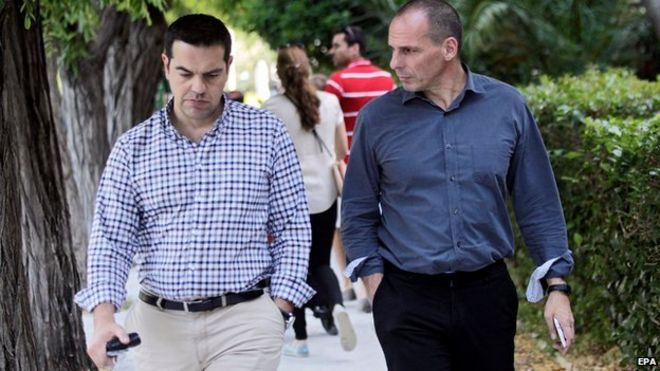
Greek deputy Prime Minister Yannis
Dragasakis said that Athens was still ready to negotiate with its lenders.
He said Greek government proposals submitted
on Sunday had fully covered the fiscal deficit as demanded.
However, Mr Dragasakis added that the EU and
IMF still wanted Greece to cut pensions - something Athens has said it would
never accept.
IMF chief economist Olivier Blanchard said
in a blog post that an agreement will require "difficult decisions",
with "tough choices and tough commitments to be made on both sides". The
cash-strapped nation is trying to agree a funding deal with the European Union
and IMF before the end of June to avoid a default.
Eurozone finance ministers will discuss
Greece when they meet on Thursday. The gathering is regarded as Greece's last
chance to strike a deal.
The Commission spokesman said:
"President [Jean-Claude] Juncker remains convinced that with stronger
reform efforts on the Greek side and political will on all sides, a solution
can still be found before the end of the month."
'Losing patience'
The talks
come as Germany ramps up pressure on Greece. Vice-chancellor Sigmar Gabriel
said on Sunday that European nations were losing patience with Greece.
Germany wanted to keep Greece in the
eurozone, but writing in Bild he warned that "not only is time running
out, but so too is patience across Europe".
Mr Sigmar is also economy minister and head
of junior coalition partners the Social Democrats. His article is seen as a
warning, particularly as his party has been more sympathetic to Greece in the
past. "Everywhere in Europe, the sentiment is growing that enough is
enough," he wrote.
Greece is seeking to avoid defaulting on a
€1.5bn debt repayment to the IMF due by the end of the month. Creditors have
demanded cuts in spending in return for another tranche of bailout funds.
But Greece's ruling left-wing Syriza party,
led by Alexis Tsipras, was elected in January on promises to ease up on the
highly unpopular austerity measures, increase the minimum monthly wage and
create more jobs.
However, on Saturday Mr Tsipras warned the
Greek people to prepare for a "difficult compromise".
(Πηγή: bbc.com)


Δεν υπάρχουν σχόλια:
Δημοσίευση σχολίου