
Greek PM
Alexis Tsipras is due to resume talks with international creditors with time
running out to find a solution to Greece's debt crisis.
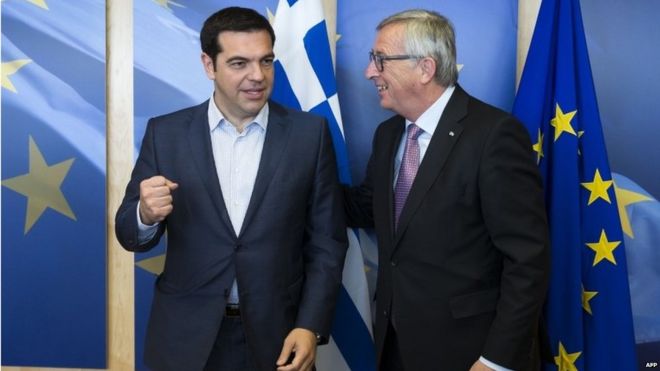
But they
still hope to thrash out a deal before eurozone finance ministers meet at 13:00
local time (11:00 GMT). Greece must repay a €1.6bn (£1.1bn) IMF loan by next
Tuesday or face default.
That could
lead to Greece exiting the eurozone, with possible repercussions for the rest
of Europe and the world economy.
"The
Greek government remains firm on its positions," a Greek official told
reporters after two hours of overnight talks in Brussels broke up early on
Thursday.
An earlier
round of talks on Wednesday - that lasted seven hours - failed to produce a
breakthrough.
As he
headed into the talks, Mr Tsipras criticised creditors for rejecting his latest
reform proposals, which they say are not viable.
Negotiators
resumed discussions at 06:00 local time (04:00 GMT) with Mr Tsipras due to meet
creditors at 09:00 (07:00 GMT), Greek officials said.
On
Wednesday, eurozone finance ministers cut short an emergency meeting meant to finalize
a deal, when it became clear there was no deal to discuss.
"Unfortunately
we have not reached an agreement yet, but we are determined to continue
work," Eurogroup chairman Jeroen Dijsselbloem said.
Ministers
now hope to approve a deal that can then be rubberstamped by national leaders
meeting in Brussels on Thursday for a two-day EU summit.
Only once
agreement is reached will creditors unlock the final €7.2bn tranche of bailout
funds for cash-strapped Greece.
The latest Greek proposals are believed to
include:
New taxes on businesses and the wealthy
Selective increases in VAT
Savings in pensions linked to curbing early
retirement and increasing pension contributions
No further reductions in pensions or
public-sector wages - "red lines" for Greece's left-wing Syriza
government
The Greek
government has put forward budget proposals that it says meet the targets
demanded by its creditors.
But
correspondents says they include far more tax rises and far fewer spending cuts
than creditors had suggested, and the IMF in particular is refusing to accept
them.
This
prompted Mr Tsipras to tweet on Wednesday: "The repeated rejection of
equivalent measures by certain institutions never occurred before - neither in
Ireland nor Portugal.
"This
odd stance seems to indicate that either there is no interest in an agreement
or that special interests are being backed."
(Πηγή: bbc.com)


Δεν υπάρχουν σχόλια:
Δημοσίευση σχολίου